
How to pick a niche (without shrinking your ambition)
Why choosing the smallest group can move you forward.


Heya, it’s Alicia. Welcome back to Customer Focus – a newsletter to help you accelerate growth by putting your customers at the heart of your business.
AI can speed you up. It can’t think for you.
The GTM Playbook teaches product marketers how to operate like strategic GTM owners – sharpening positioning, customer insight, and commercial judgment so your work actually moves the needle.
Ready to stop coordinating and start leading GTM strategy? This course is for you.
Explore the curriculum →To get a feel for the content explore free templates and resources here!
We’ve got a vibe coding problem. But it’s not the vibe coding itself.
I’m seeing the same pattern play out with Lovable builders every week.
It looks like this: you build something in a weekend that used to live only in your head. It’s finally here! You stayed up later than you should have. You moved faster than you thought possible, without an engineer or PM in sight. You watched it come to life on the screen and realized, with a mix of disbelief and pride, that you actually did it.
For a moment, the doubt goes quiet.
You’ve proven to yourself that you are not just someone with ideas. You are someone who ships.
You’re a builder.
And when the prototype loads, when someone else clicks through it, when it works even imperfectly, there’s a visceral rush: this is reaaaaaal.
…. then it ends.
And you hit the part nobody warns you about.
What now?
I’ve spoken to multiple women who absolutely crushed it in Lovable SheBuilds hackathons. They shipped, presented, got recognized, surprised themselves. Then they left feeling unmoored. Where do I go now? Who is this for? What am I even building? Do I keep going, or was that just a fun sprint with a shiny demo at the end? How can I keep this feeling, and this hope?
That emotional drop-off is really big. It’s the moment a lot of builders start adding features to avoid making decisions. More buttons, more pages, more “maybe it works for…?” ideas.
Y’all, that ain’t it. I am here to give you one single piece of guidance:
Your next step is finding focus.
Your next step is choosing a niche.
Because picking a niche is not a brand decision; more critically, it is a risk decision.
It decides whether you spend the next three months collecting polite compliments, or the next three weeks validating real signal.
Why niches deliver riches
A niche gives you three unfair advantages:
Your buyer recognizes themselves faster.
Your message has frictionless relevance.
Your solution becomes repeatable instead of bespoke.
That last part is the one people miss.
Most early-stage churn comes from selling to the wrong people. Wrong pain, urgency, and expectations. Wrong support burden. You win the deal, then you bleed precious (and expensive) time trying to make them happy. Your roadmap turns into a graveyard of edge cases.
It’s so easy to let this happen, I’d argue this is the norm for most startups, with only a select few having the audacity to truly niche down – to be as uncomfortably narrow as possible in their 0-1 phase.
And yet, choosing a niche protects you from that graveyard.
A niche is also how you build confidence. When your pipeline is full of the same kind of buyer, with the same kind of use case, your whole operating system gets calmer. Your product decisions get cleaner. Your marketing gets sharper. Your sales conversations stop feeling like improv theatre.
The niche mistake builders make
They niche by “persona” and by that I really mean, by job title.
“I’m building for founders.”
“I’m building for marketers.”
“I’m building for creators.”
…But, that’s not a niche. That’s an audience category, and beneath each statement is a vast range of pain, needs, urgency, and contexts. That is, by definition, not a niche.
A niche is a shared pain, in a specific context, with a clear consequence.
So the question is not “who could use this?”
The question is “who is already paying a price for this problem today?”
They may be paying a price in a variety of ways.
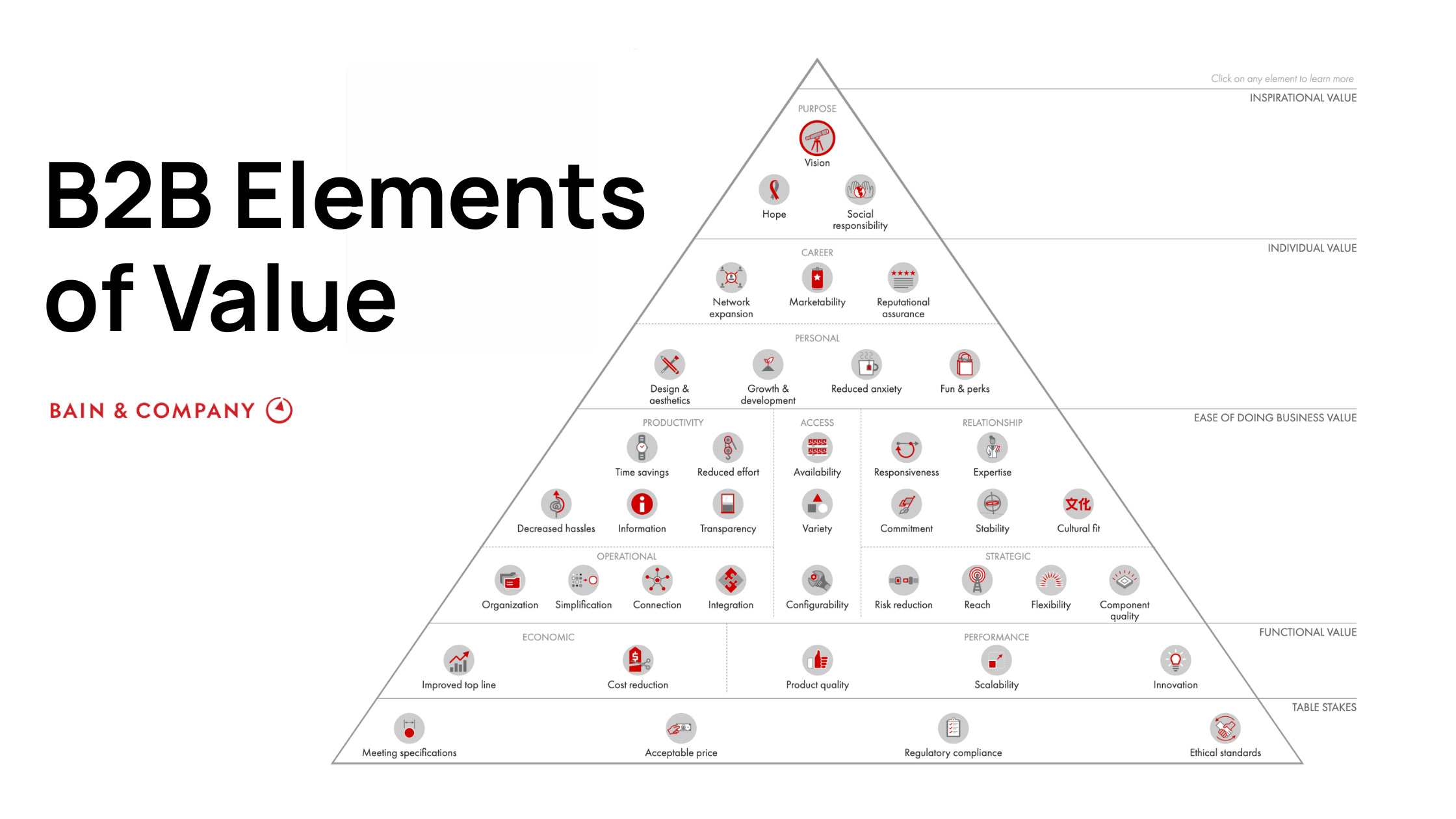
Money. Time. Risk. Reputation. Stunted growth (personal or professional). Stress. Opportunity cost. A more memorable customer experience. A more meaningful sense of purpose (remember the B2B Elements of Value from Bain – which reminds us that buyers are still people, who value things beyond improved business outcomes. Subjective, even emotional concerns, often matter more than you might think).
Your niche lives where consequence lives.
The niche filter: 5 questions that force clarity
If you want to pick a niche fast, use this filter. Write your answers in one page:
1) What is the painful moment you are anchoring to?
Name the real, human moment, not the feature you think you should build. For example:
“Reporting pay gaps for compliance.”
“Preparing board updates with messy data.”
“Onboarding a new team member into a complex workflow.”
“Chasing invoices across multiple tools.”
Good niches start with a moment of friction real people already feel.
2) Who feels that pain weekly, not yearly?
Frequency matters because it creates urgency. Without urgency, you’ll constantly experience deal cycles dragging out, and SQLs going cold due to the most dreaded three words: “not right now”.
So often, I see yearly pain becoming a “we’ll deal with it later” project.
A weekly pain becomes a budget conversation.
If your niche only hits once a year, your product has to be extraordinary to stay top of mind.
3) What do they do instead today?
I often see startups applying too narrow of a lens when assessing their competitive alternatives. Yes, you might have a handful of direct competitors with similar offerings. But also, besides “doing nothing” being arguably the #1 universal competitor in the world, there are plenty of other things your niche ideal buyer is doing to work around the pain.
Spreadsheets. Slack chaos. Manual workarounds. Hiring temps. Paying agencies. Duct-taping tools together. Doing nothing and eating the consequences.
In reality, this is where the truth lives.
If you cannot describe the current workaround in detail, you do not understand the niche yet.
4) Can you reach them in a capital-efficient way?
One question I often get from early stage founders: which channels should I focus on?
The annoying answer is: it depends!
Are you an enterprise solution, where every deal is slightly bespoke? Then you’ll probably want to explore a more sales-led motion and consider more of an ABM playbook.
Or more fit for traditional SaaS with high volumes of deals being created every week? Then PLG or PLS self-serve buyer journey may be a good fit.
Or maybe it’s a combination of the two. But I can guarantee that you need to talk to your ideal customers first to find out what they want.
You need a realistic path to conversations.
A niche is only useful if you can actually get in front of it.
Communities. LinkedIn clusters. Events. Job titles. Slack groups. Newsletters. Conferences. Existing tools they already use. Partners who already have trust.
If the niche is real, there is already a place where those people gather to trade notes.
For example when I joined Ravio about 3 years ago, I talked to 15 customers to learn about our ICP.
A Total Reward leader at a mid-market scale up said to me:
“It’s quite lonely in this job. It’s just me, answering [to the board and CFO] to explain all of our compensation decisions. I don’t need a fancy conference or anything, I just want to sit with other solo Reward leaders who know what I’m going through, and to swap notes and connect.”
This insight has been crucial for us. We started slowly testing organic community programs across Europe. It took off like wildfire.
Now, this one simple insight has been validated relentlessly, and serves as a foundational nucleus of our community-led growth GTM strategy.
5) Can you solve this repeatedly without becoming a services business?
This is the scaling question.
You’re looking for a niche where the core job is the same, even if the details vary.
If every customer requires a custom build, you have a consulting business. That can be great. It’s a different operating model, and, most importantly, it’s not the model most people assume they are building.
Don’t get stuck drifting into bespoke-town. This means you’re reacting to every single piece of feedback that comes at you, and you’re not focused.
“Get uncomfortably narrow” without boxing yourself in
Choosing a niche can feel like closing doors. It can feel like you are shrinking your ambition, limiting your upside, making your world smaller before it has even had a chance to grow. When you have just built something that could theoretically serve “everyone,” narrowing down to one small group can feel almost irresponsible. I would argue, anecdotally, that 90% of the founders I’ve worked with over 15 years fall into this camp (sorry, it’s true).
But bravery in early-stage building is not about keeping every option open. It is about committing to one path long enough to see real signal.
A niche is not a life sentence. It is a starting line – and that’s it.
You are not declaring that this is the only customer you will ever serve. You are declaring that this is the customer you will learn from first. The one whose pain you will understand deeply. The one whose language you will internalize. The one whose objections you will anticipate before they speak.
When you serve one group exceptionally well, you build proof, references, and case studies that cut through the noise and speak directly to someone, versus trying to be something for everyone. You more quickly build confidence in your own decision-making. Expansion becomes a choice grounded in evidence, not reactive anxiety.
Without that mindset, it really is too easy to drift into the noise. To chase edge cases. To say yes to every opportunity because you are afraid of missing out. To become untethered in a sea of GTM possibilities. To be frank, I see this as avoidance dressed up as openness.
Without sounding too soapbox-y, I want you, as a builder and a founder, to have the audacity to say: this is who we are for right now, and this is who we are NOT for.
Bravery, as a founder, is accepting that some people will not see themselves in your message – and trusting that the right people will see themselves instantly.
When you choose a niche, you are not making your world smaller. You are making your progress measurable. You are choosing the smallest group of people who:
feel the pain today
have a consequence attached to it
will buy faster than everyone else
are reachable without burning your soul down
Only once you earn repeatability, does expansion become an option. Before repeatability, expansion is a distraction.
A concrete example from my world
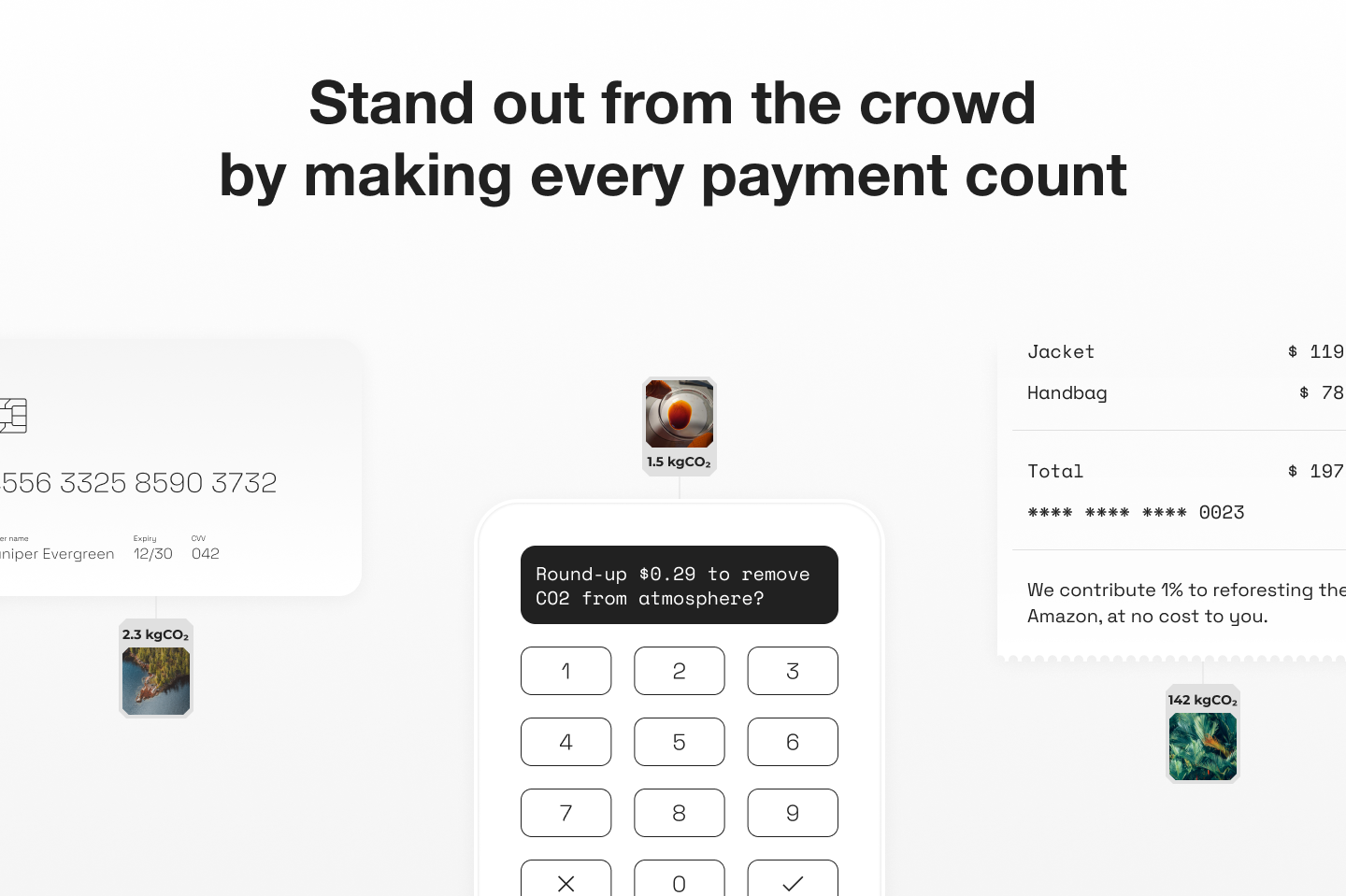
When I joined an early stage climate tech startup, the API product could “work for anyone.” The market sounded enormous. In the super early days (closer to 0 than to 1), the sales motion felt like walking into fog.
But, thanks to founder-supported ICP focus, we got traction when we made the niche decision.
We focused on fast-growing UK fintechs who cared about differentiation and merchant growth. That niche had a specific worldview. They valued impact, and they funded what moved growth metrics. They had real constraints. They had real timelines. They had real trade-offs.
That gave us a clear GTM path:
one language set
one buying committee pattern
one objection cluster
one repeatable pitch
Then the product decisions got easier, the sales conversations got faster, the signal got louder.
That is what choosing a niche does. It lets you position as the thing for someone, versus something for everyone.
A practical way to decide your niche this week
If you want to get moving immediately, do this in 60 minutes.
Write down 6 possible niches as “pain + context.”
Example format: “People who struggle with X when Y happens.”
Score each niche 1–5 on four criteria:
Urgency: how soon they need it?
Consequence: what happens if they do nothing?
Reachability: how easily you can get conversations?
Repeatability: how consistently you can deliver value?
Pick the highest total score and commit to seven conversations in seven days.
Then run the real test.
Send a short message that names the pain and asks for ten minutes.
Show the prototype. Ask them to describe the moment they feel the pain.
Ask what they do instead. Ask what it costs them. Ask what would change if it was solved.
Then ask the commitment question: would you pay for this, and what would “worth it” feel like.
You do not need a perfect niche, and you don’t need to get it right the first time. In fact, you probably won’t get it right the first time, but that doesn’t matter at all. It’s the act of choosing something that empowers you with focus that matters.
You just need a niche you can learn from fast, so you can iterate faster.
Final takeaway
Your niche is your first real decision as a builder.
The moment you decide who this is for, everything else starts to organize itself around that choice. Your language sharpens, outreach gets easier, product decisions feel less like abstract guesswork.
Choosing a niche is a vote for clarity about the pain you are anchoring to. Clarity about the context in which it shows up. Clarity about what success actually looks like for someone in a real week of their life, as a human (not an audience category).
It is also a vote for momentum. When you speak to the same kind of buyer about the same kind of problem, patterns emerge. Objections repeat. Wins start to look similar. You learn faster because you are learning in one direction.
And it is a vote for signal, which only appears when noise is reduced. If you try to appeal to everyone, the feedback will be scattered and contradictory. When you focus on one niche, the feedback becomes coherent. You can see what is working. You can see what is not.
So if you feel that post-hackathon wobble, I understand it.
You just did something brave and, dare I say, audacious. Now your brain wants safety. It wants to keep every door open so you cannot be wrong.
Pick the niche anyway! You are not shrinking your ambition. You are concentrating it.
Then let real conversations earn you your confidence.
Here’s to growth,
Alicia
Great piece. This really cleared something up for me. I’ve hesitated to narrow my focus because it felt like saying no to growth. But the way you explained demand density and relevance made it obvious that focus actually increases opportunity.